
We build B2B and B2C digital projects with AI-powered execution, eliminating execution risk from idea to spinoff. Technology development and online marketing for new business units, as an operating co-founder — not just capital — all the way to formal investors and exit.
A Venture Builder is not a fund that selects already-ready startups, nor is it a startup studio that only builds its own internal ideas. GTaviani Venture Builder is built on a different model: the capital we invest in each project comes primarily from GTaviani Consulting and a close network of partners and investors who share the same method. We don't manage a third-party fund's money — we put our own capital on the table, together with that of people who know us.
| Venture Capital | Startup Studio | GTaviani Venture Builder | |
|---|---|---|---|
| Capital | Third-party fund (LPs) | Studio's founders | GTaviani + partner network |
| Idea origin | Already-formed startup | Internal team | External founder, selected |
| Operational involvement | Advisory, board | 100% internal execution | 100% execution through spinoff |
| Equity retained | Minority | Majority from day one | 20-50% post-spinoff |
| Return | Fund exit | Startup exit | Exit + post-spinoff fees |
The market gap GTaviani Venture Builder fills: first-time founders with strong market intuition and digital ideas that leverage artificial intelligence, but lacking the technology, marketing and corporate skills to execute them.
| Traditional startups | Venture Builder startups | |
|---|---|---|
| 5-year success rate | ~10% | 30-40% |
| Average time to Series A | ~56 months | ~25 months |
| Access to seed round | less than 1% reach Series A | 84% raise a seed round |
| Average IRR for investors | ~21% | ~53% |
Figures refer to the venture builder / startup studio industry model, not to specific results already achieved by GTaviani Venture Builder.
A dedicated business unit for the project. The VB covers 100% of technology, marketing and management costs.
Tickets up to €50,000, invested in project development via Participatory Financial Instruments (SFP) or SAFE agreements. No notarial deed at the fundraising stage. Open both to those who discover the project independently and to those introduced by a founder (Family & Friends).
The business unit becomes an independent company. Subscribed SFP/SAFE instruments convert into formal equity. The VB retains a 20-50% stake. The notarial act, not required at fundraising, happens here, at incorporation.
The spinoff company is guided toward exit or pre-exit paths, including entry into acceleration programs or rounds with Venture Capital funds. From spinoff onward, the VB may earn fees for services rendered, based on equity and shareholder agreements.
A team of AI Resources — agents specialized in development, marketing and management — coordinated by a proprietary AI-agent negotiation model.
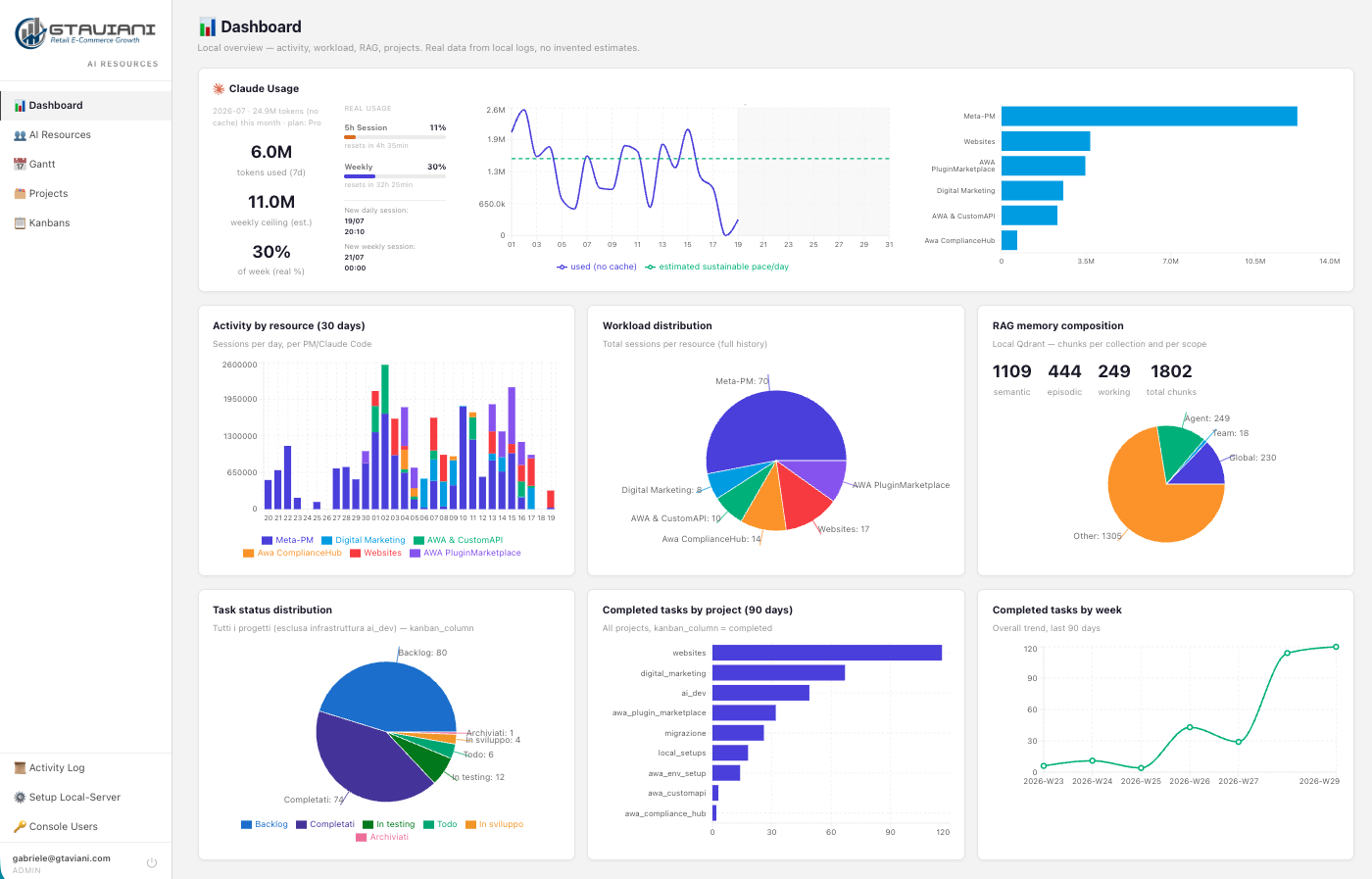
80% reduction in development time compared to a traditional human team.
Reduced development costs (CAPEX), allowing most of the invested capital to go toward marketing and customer acquisition.
Constant quality over time, without the discontinuity of a changing human team.
The first consumer Mobile App for AI Doctor. Launched in 2024, it is now installed worldwide: 7 interface languages (including Chinese) and over 110 conversation languages provide first-line informational assistance to the person, in compliance with privacy and AI usage rules.

Launched in June 2026, it's the digital platform for AI Consultants serving SMEs. Consultants can structure monthly subscription plans that include consulting hours and wallet credits, also usable to pay for AI tokens, plus markup management on services and tokens. The consultant's client gets a whitelabel AI Workspace environment to manage projects and AI resources created by the consultant, where their own employees can access the AI Agents team for dialogue.

Calculated at the start of incubation based on the value of the technology, marketing and operational services provided by the VB. It converts into real equity only at spinoff.
The business unit is shut down. The founder does not have to reimburse the VB's development costs; investors bear no liability beyond their invested capital.
Technology development, marketing and sales, customer support, entrepreneurial training and fundraising — details on the Founders page.
Assessed case by case, based on the VB's portfolio at the time.
Development and market testing: 3-6 months. Corporate spinoff: typically within the twelfth month, upon reaching break-even or with the entry of external investors.